
Energy-Efficient Upgrades for Your Inground Pool
An older inground pool can still look inviting while quietly consuming more electricity, fuel, water, and chemicals than necessary. Aging single-speed pumps, inefficient heaters, and manual controls often increase operating costs without making the pool more enjoyable.
For Maryland homeowners, strategic equipment upgrades can reduce waste, simplify maintenance, and extend the swimming season. The key is to treat the pool as one connected system rather than replacing equipment one piece at a time. This guide explains which upgrades typically deliver the most value, how they work together, and what to consider before beginning a swimming pool renovation.
Start With the Pool’s Biggest Energy Users
Before purchasing new equipment, have the pool evaluated for circulation problems, leaks, undersized plumbing, and outdated electrical components. Installing premium equipment will not solve an underlying hydraulic or structural issue.
Upgrade to a variable-speed pool pump
A traditional single-speed pump runs at full power whenever it is operating, even when the pool only needs gentle circulation. A variable-speed pump can run at lower speeds for routine filtration and increase its output for vacuuming, heating, or operating water features.
Because moving water more slowly requires substantially less energy, upgrading to a variable-speed pool pump is often one of the most practical efficiency improvements available. Lower operating speeds may also mean quieter performance and less stress on filters, fittings, and plumbing.
The pump must still be sized correctly. Bigger is not automatically better. Pool volume, pipe diameter, elevation changes, spa spillovers, rooftop deck features, and water features all affect the required flow rate.
Replace outdated lighting
LED pool lights use less electricity than older incandescent fixtures and generally last longer. Modern systems also offer dimming, scheduling, and color controls. During a renovation, replacing old fixtures can be especially sensible because the pool may already be drained or access to the light niche may be easier.
Build an Efficient Heating and Water-Care System
Heating can be another major operating expense, but the right equipment depends on how and when you use the pool.
Compare heat pumps and high-efficiency gas heaters
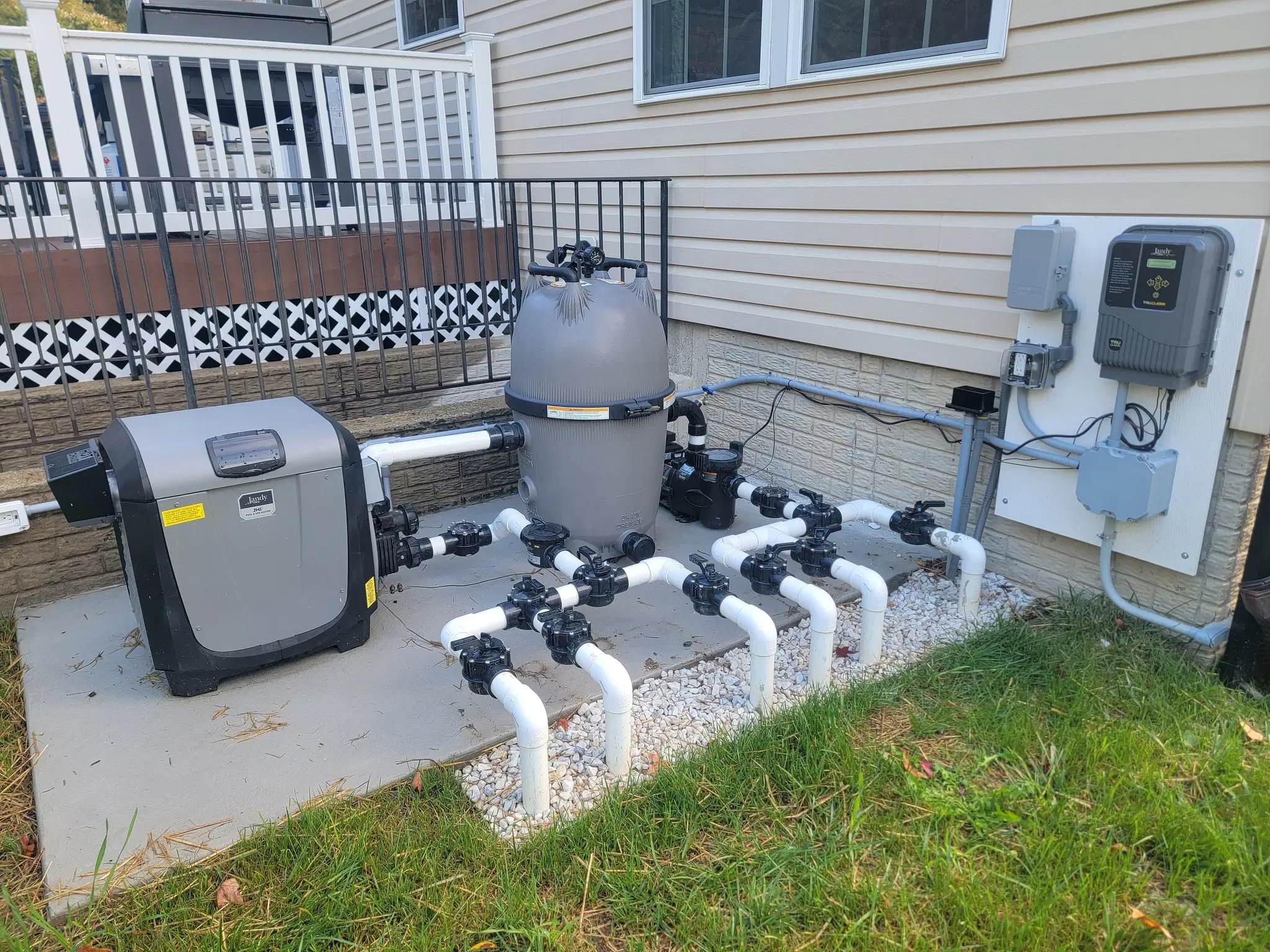
An electric heat pump transfers warmth from the surrounding air into the water. It can be highly efficient when outdoor conditions are favorable and the homeowner prefers steady temperature maintenance. A high-efficiency gas heater generally warms water faster, which may suit pools used intermittently or spas that need rapid heating.
An energy-efficient swimming pool heater installation should account for pool size, desired temperature, shade, wind exposure, utility availability, and seasonal use. A properly fitted cover can also reduce heat loss and evaporation, sometimes making as much practical difference as the heater itself.
Understand saltwater conversion
A saltwater system uses a chlorine generator to produce sanitizer from dissolved salt. It does not create a chlorine-free pool, nor does it automatically reduce electrical use. Its main benefits are consistent chlorination and less day-to-day handling of traditional chlorine products.
Saltwater pool system conversion cost varies based on pool volume, generator capacity, electrical work, automation compatibility, and the condition of surrounding materials. Certain metals and natural stone may need additional protection from salt exposure. Homeowners should request an itemized estimate that separates equipment, electrical work, plumbing modifications, start-up chemicals, and labor.
Improve filtration and circulation
An efficient system pairs the pump with a correctly sized filter and balanced return flow. A clogged filter, restrictive plumbing, or poorly positioned returns forces equipment to work harder. Professional swimming pool servicing can identify pressure changes, water-balance issues, and components that are undermining otherwise efficient equipment.
Use Smart Automation Without Overcomplicating the Pool
Smart automation systems for inground pools can place pumps, heaters, lights, sanitation equipment, and water features on coordinated schedules. Many systems also let homeowners check status or adjust settings from a phone.
Automation is most useful when it prevents waste. For example, it can:
- Run filtration at a low speed during lower-demand periods
- Increase pump speed only when the heater or cleaner needs more flow
- Prevent a heater from operating without adequate circulation
- Schedule lights and water features to turn off automatically
- Coordinate spa mode without requiring several manual valve changes
- Provide alerts when temperatures or equipment conditions fall outside set ranges
Compatibility matters. Before choosing a controller, document the model, voltage, and communication requirements of every component. Otherwise, homeowners may pay for advanced features that cannot fully control their existing equipment.
This approach reflects a broader construction trend toward real-time digital communication and connected systems. However, technology should make pool ownership easier—not create another complicated dashboard. Ask for a walkthrough after installation and keep a written record of schedules, set points, warranties, and emergency shutoff procedures.

Plan the Upgrade Around Cost, Timing, and Long-Term Care
The cost of an efficiency upgrade depends on equipment capacity, access, electrical service, plumbing condition, automation goals, and whether repairs are discovered during installation. Older pools may reveal corroded valves, leaking underground lines, obsolete wiring, or mismatched equipment. A trustworthy proposal should explain allowances and potential change-order conditions instead of hiding every uncertainty inside a single number.
When comparing contractors, ask:
- Is the equipment sized from actual pool and plumbing information?
- Does the estimate itemize equipment, permits, electrical work, labor, and start-up?
- Which existing components can remain, and why?
- Are warranties dependent on professional installation or registration?
- Who coordinates inspections when electrical or gas work requires them?
- Does the company carry appropriate licensing and insurance for the work involved?
- What maintenance will the new system require?
Project timing matters too. Combining equipment upgrades with resurfacing, plumbing repairs, decking work, or other renovations can reduce duplicated labor. Seasonal pool opening and closing appointments also provide useful opportunities to inspect the system, review winter damage, and adjust programming for changing water temperatures. Proper winterization is especially important during a Maryland winter because freeze damage can erase the savings gained from efficient equipment.
Efficiency does not eliminate maintenance. Filters still need cleaning, sensors require inspection, and water chemistry must remain balanced. Regular attention helps pumps, heaters, finishes, and salt-system components reach their expected service life.
Make Your Pool Less Expensive and Easier to Enjoy
The strongest upgrade plans usually begin with efficient circulation, then address heating, filtration, sanitation, lighting, and automation as one coordinated system. Correct sizing and professional installation matter just as much as the efficiency rating printed on the equipment.
Legacy Pool and Spa LLC provides pool renovations, repairs, servicing, installations, and seasonal opening and closing support. If your equipment is noisy, difficult to control, or driving up operating costs, contact Legacy Pool and Spa LLC to schedule an evaluation from the team based in Finksburg. You will receive recommendations shaped around your pool, how you use it, and which improvements offer meaningful long-term value.